



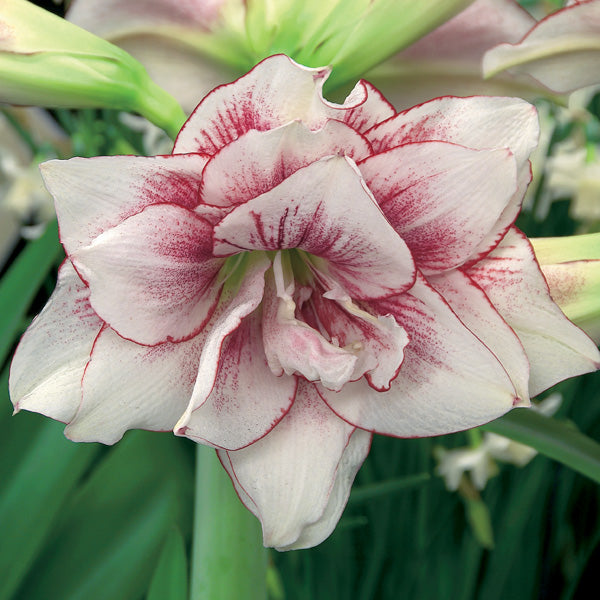

With their spectacular show of trumpet-like flowers around Christmas, Hippeastrums are a summer star. When it comes to growing this perennial bulb, also known by the common name* amaryllis, problems tend to be minimal - it’s tough, tolerant and pest resistant. Like any other plant, though, Hippeastrums aren’t immune to disease, so it’s worth keeping an eye out for issues. The sooner you deal with them, the happier your garden will be.
Problems to look out for
The most common problems seen in Hippeastrums are caused by microorganisms. Unlike many insect pests, which can often be dealt with while leaving the plant intact, these infectious organisms are often best addressed by disposing of the affected plant matter. This may be necessary to prevent the infection from spreading to neighbouring plants.

Red blotch/ Leaf Scorch
Red blotch, also known as leaf scorch, is a fungal disease caused by the organism Peyronellaea curtisii (formerly known as Stagonosporopsis curtisii). This appears as red spots (typically with clear margins/outlines) on leaves and flower stems, eventually causing breakage and withering. Unfortunately this disease is endemic to all members of the Amaryllis family, and also some Narcissus and Galanthus, however it is more commonly found on Hippeastrums. The fungus can be carried on the bulbs, so removing the infected stalks won’t fix the problem. Symptoms of this disease in bulbs are red spots with definite margins that develop into soft sunken patches on the bulb, sometimes radiating all the way through several layers. Care needs to be taken when diagnosing this disease as any damage to Hippeastrum bulbs will cause a red mark on the bulb, similar to bruising on our skin. Always look for the characteristic margins and soft sunken patches to correctly diagnose this issue. Badly infected bulbs need to be removed and destroyed as secondary infections can cause the bulbs to rot. Moderate to mild infections can be controlled using a systemic fungicide such as Mancozeb, Banrot or Benlate on a regular basis. Eradication is very difficult so cultural controls are required to keep this infection at bay, and under control. Avoid overhead watering and getting the foliage wet to minimise this disease, and regularly spray foliage with a fungicide, particularly as plants are beginning to go dormant as this is a time when infections can return to the bulb, and the weather begins to become cool and wet, providing ideal conditions for active spores to spread. A wet cool growing season will also see this disease prevalent as this sort of weather allows the spores to proliferate.
Mosaic virus
Mosaic virus causes the plant’s leaves to take on yellow streaks that increase in intensity over time. This symptom may not be visible in the leaves until they have matured. The infection will gradually reduce the plant’s growth and cause it to stop flowering. There is no treatment, so infected plants should be discarded to avoid transmitting to other plants.

Bulb/root rot
Large, fleshy bulbs, like those of hippeastrums, are prone to rot. This is caused by fungal and bacterial organisms in the soil, especially where there is poor drainage or overwatering. Rotting bulbs aren’t too hard to spot - their colour and texture (and sometimes even their smell) will be off. They need to be discarded to avoid infecting other plants.
 Grey mould
Also known as botrytis blight, this is a fungal infection that causes spotting, discolouration, wilting and decay. Grayish-brown spore masses eventually appear on affected areas, which should be removed and disposed of. Preventative measures include ensuring sufficient air circulation around plants, removing spent flowers and avoiding excess dampness.
Keep your plants healthy
While it can be disheartening to see a diseased plant struggling in your garden, it’s generally not cause for too much concern - provided you deal with it promptly. Left to their own devices, plant pathogens do have the potential to spread themselves around, and it’s well worth disposing of infected plants (or parts thereof) before this happens. In general, proper garden hygiene, plus routine plant and soil care, will help ensure your garden stays disease-free, with healthy plants that are able to resist infection.


Share:
What Should I Do With My Amaryllis After It Blooms?
Dahlias: Shade or Full Sun?