



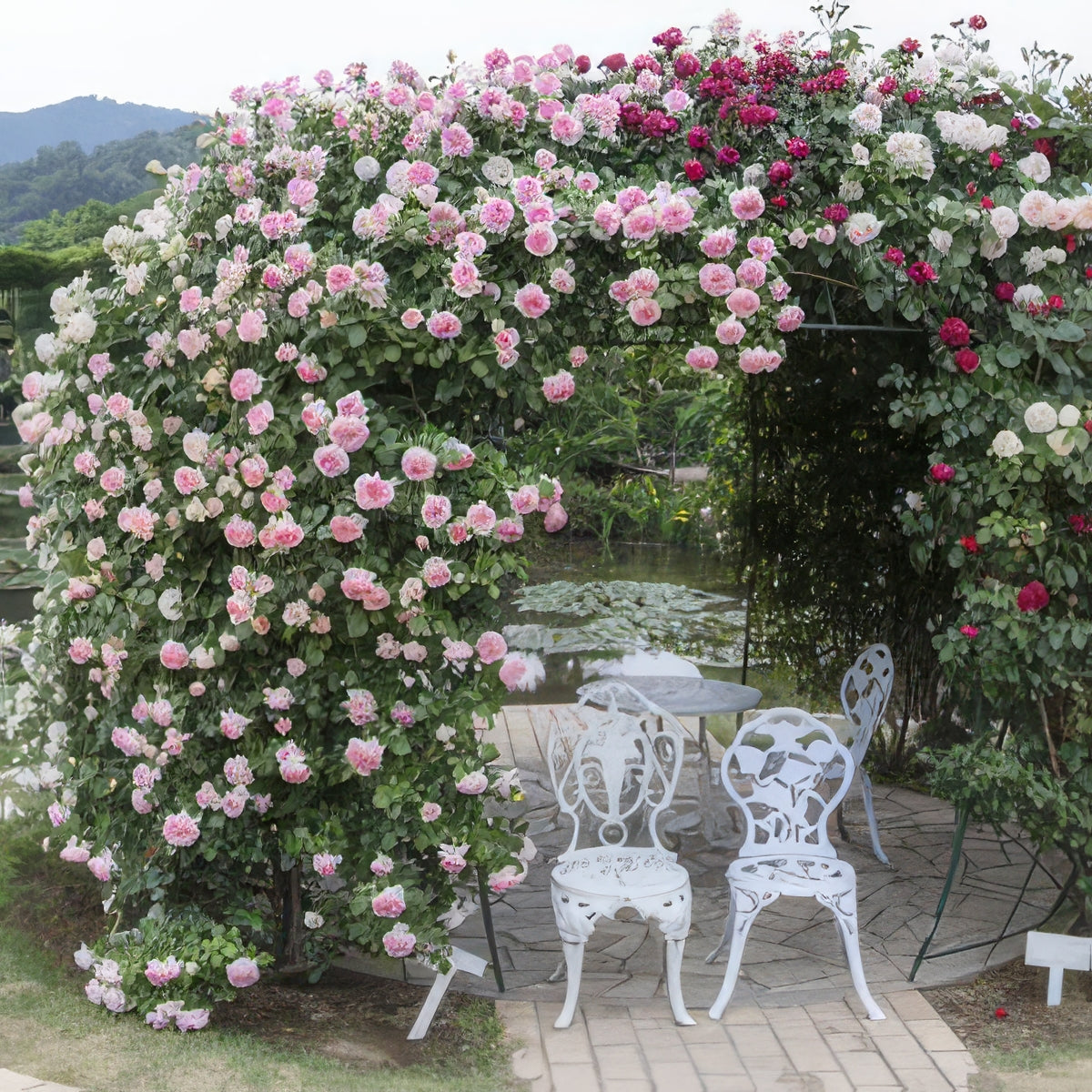
A garden arch or obelisk gives climbing plants somewhere to turn upward, bringing flowers, foliage and fragrance into parts of the garden that can otherwise feel empty. An arch can frame a gate or path, while an obelisk can lift colour through the centre of a bed without using much ground space. When choosing climbing plants in Australia, the best result comes from matching the plant to the support, local conditions and level of maintenance you are prepared to give it. Start with mature size and growth habit, then look at flower colour and season. This keeps a delicate support from being overwhelmed and gives the climber enough room to become the feature you planned.

Why Grow Climbing Plants on Arches & Obelisks?
Vertical planting adds shape to a garden before surrounding shrubs and perennials reach their full size. It can define an entrance, create a focal point, soften a metal frame and bring flowers closer to eye level. Evergreen growth can also add year-round structure, while deciduous climbers create a stronger seasonal change. The support and plant need to work as one. A narrow obelisk calls for controlled growth around a single point. A pergola can accommodate a wider canopy. A pathway arch needs enough clearance for people to walk through comfortably once stems and side shoots develop.
Match the Climber to the Structure
Plants for Garden Arches
Arches suit plants that can be trained from one or both sides and guided across the top. Clematis, climbing roses and star jasmine are useful options when their mature size matches the arch. Around a frequently used path, consider thorn level and train new growth away from faces and shoulders.
Obelisk Plants
Obelisks are narrow, freestanding supports placed in beds or large containers. They generally suit moderate climbers that respond well to tying and pruning. Selected clematis and climbing roses can provide colour from several viewing angles without quickly hiding the shape of the support. Check stability before planting, especially in an exposed position or pot.

Climbers for Pergolas
Pergolas have more room for horizontal spread and, when strongly built, can carry heavier mature growth. Wisteria, larger climbing roses, jasmine and vigorous native climbers can suit these structures. Decide whether you want summer shade, winter sunlight or evergreen coverage before choosing the plant. Browse garden structures and supports alongside the climber so their scale and strength are compatible.
How to Choose the Right Climbing Plant
Check Mature Size & Weight
Read the mature height and spread for the exact variety before planting. The Garden Express product pages can help you compare growth habit, preferred position and mature size. A small nursery plant can develop into a wide, woody climber that needs strong permanent support, so wisteria and Banksia roses are better matched with substantial structures than lightweight obelisks.
Understand How It Climbs
Twining stems wrap around uprights or wires. Fine-stemmed climbers need mesh, lattice or closely spaced supports. Climbing roses produce long canes that must be tied and directed. Choosing the right framework makes training easier and gives the finished plant a more even shape.
Check the Growing Conditions

Sun, drainage, frost, wind and reflected heat all affect establishment and flowering. A west-facing wall can be hotter than an open bed, while an exposed arch may dry out quickly. You can read our ‘Australian Climate Guide’ to identify your broad region, then check the variety description for its preferred sun, soil and protection.
Decide Between Evergreen & Deciduous
Evergreen climbers keep foliage on the structure for most or all of the year and can add screening. Deciduous plants reveal the frame in winter and may allow more sunlight into nearby spaces. Choose according to the job the structure needs to do outside the main flowering season.
Popular Climbers & Where They Work Best
| Climber | Best suited to | Why choose it |
|---|---|---|
| Clematis | Arches and obelisks | Varied flower colour and flowering seasons |
| Climbing rose | Arches and larger obelisks | Classic flowers, colour and fragrance |
| Star jasmine | Arches and pergolas | Evergreen foliage and fragrant flowers |
| Wisteria | Strong pergolas and large arches | Cascading spring flowers and summer shade |
| Native climbers | Arches, trellises and pergolas | Native foliage and seasonal flowers |
Clematis for Colour Across the Seasons

Clematis brings flowers to eye level without developing the heavy framework of mature wisteria. Varieties differ in vigour and flowering time, with groups that flower from winter and spring through to late summer and early autumn. Give the stems fine support and keep the roots cool with mulch or nearby planting. Our ‘clematis growing guide’ explains the different pruning groups.
Climbing Roses for Classic Arches
Climbing roses suit cottage-style entrances, pathway arches and larger obelisks. Tie the canes into position and guide some growth across or around the frame so flowers develop over a wider area. Compare thorn level, fragrance, mature size and flowering habit, then check out our ‘guide to growing climbing roses’ for planting and training advice.
Star Jasmine for Fragrance and Foliage
Jasmine climbers are useful near a gate, courtyard or seating area where fragrance can be appreciated. Star jasmine varieties combine glossy evergreen foliage with fragrant white or cream flowers from spring through the warmer months, depending on the variety, and can be trained over arches, trellises and pergolas. Shape established growth so it stays within the intended space.
Wisteria for Substantial Structures
Wisteria creates hanging spring flowers and leafy summer cover, making it a strong choice for a permanent pergola or large arch. Mature growth becomes woody and heavy, so the support must be secure. Allow room for the canopy, then follow our ‘wisteria growing guide’ and the instructions for the variety you choose.

Australian Native Climbers
Native climbers can extend the seasonal range. Climbing Hardenbergia provides evergreen foliage and winter-to-spring flowers, while Pandorea brings trumpet-shaped flowers through warmer months. Check the cultivar habit carefully because some Hardenbergia varieties are shrubby or trailing rather than strong climbers. Our ‘Hardenbergia growing guide’ provides more detail.
Plan for Seasonal Interest
Think about what the structure will show in every season. Hardenbergia can flower from winter into spring. Wisteria and many clematis varieties peak in spring, while jasmine can extend fragrance through the warmer months and Pandorea can carry colour into summer and autumn. Repeat-flowering roses may provide several flushes depending on the variety and conditions. Foliage matters between flowering periods. An evergreen plant can keep an arch leafy, while a deciduous climber can expose the structure and open the area to winter sun. Combining two climbers may extend interest, but only where their vigour, pruning needs and mature size remain manageable together.
Planting and Training Tips
Leave Space Around the Base
Plant far enough from the upright to give the root ball room and allow water to reach the surrounding soil. Avoid crowding roots against a concrete footing or solid post. Keep mulch clear of the stem and water consistently while the plant establishes.
Guide New Growth Early
Start training before stems become tangled. Use soft ties with enough room for stems to expand. Spread growth between both sides of an arch where an even canopy is wanted. On an obelisk, guide stems around the frame so foliage and flowers develop at several heights.
Train and Prune for the Plant
Add wire or mesh where fine stems need extra grip, and tie rose canes rather than expecting them to attach themselves. Once the framework is in place, prune according to the plant. Timing differs between clematis groups, roses, jasmine, wisteria and native climbers, so follow the instructions for the species and variety instead of applying one routine to every plant.
Create a Garden Feature That Grows With the Space
A well-matched climber turns an arch or obelisk into a lasting garden feature. Compare mature size, climbing habit, flowering season and site conditions before planting, then train young growth while it is easy to direct. Explore the Garden Express range of climbing plants for Australian gardens to find options for arches, obelisks, pergolas and other vertical supports.
Climbing Plants for Arches & Obelisks FAQ
What Is the Best Climbing Plant for a Garden Arch in Australia?
Climbing roses and clematis are popular for flowers, while star jasmine offers evergreen foliage and fragrance. The best choice depends on the arch size, sunlight, local climate and level of maintenance.
Which Climbing Plants Grow Well on an Obelisk?
Clematis and selected climbing roses can suit obelisks because their growth can be directed around a narrow support. Check mature height, spread and vigour before planting.
Can Wisteria Grow on a Garden Arch?
Yes, when the arch is strong, permanent and securely installed. Wisteria becomes large and heavy, so it is not a practical match for a lightweight arch or narrow obelisk.
How Long Does It Take a Climber to Cover an Arch or Obelisk?
The timeframe varies with the plant, climate, growing conditions and structure size. Vigorous climbers may fill space quickly, while moderate growers can take several seasons to form dense coverage.
Can I Grow a Climbing Plant on an Obelisk in a Pot?
Yes, provided the container suits the plant's mature root system and the obelisk is stable in wind. Compact or moderate climbers are easier to manage in pots than vigorous species.
What Is the Difference Between an Arch, Obelisk and Pergola?
An arch spans a path or entrance. An obelisk is a narrow freestanding support in a bed or container. A pergola is a larger overhead structure with room for broader, and sometimes heavier, growth.
Share:
Shade Plants Australia | Create A Tropical-Look Garden With Clivia, Ferns & Hostas