



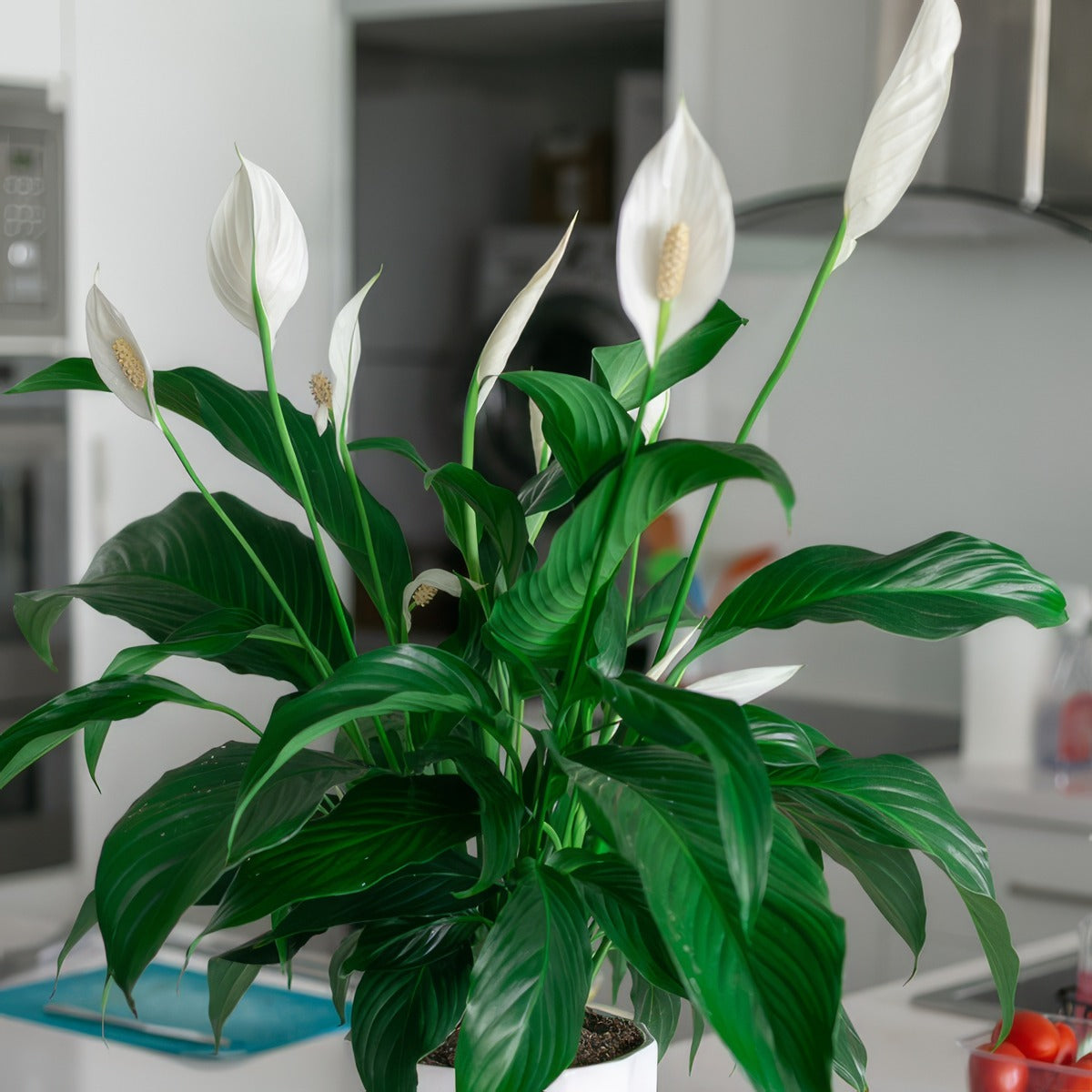
A bright living room is a wonderful place for indoor plants. Glossy leaves catch the light, colourful foliage stands out and flowering plants can bring a fresh look to shelves and side tables.
Start by noticing when sunlight actually reaches the leaves. A pot near a west-facing window can get much hotter than one across the room, even when both look well lit. Understanding these conditions will help you choose the right indoor plants for your space and keep them healthy through an Australian summer.
What Counts As Bright Light Indoors?
Before choosing a plant, watch where the sunlight falls at different times of day. A room can feel bright even when the plant itself never sits in a direct beam.
Bright Indirect Light
This is strong natural daylight without the sun shining directly onto the leaves. You might find it near a window covered by a sheer curtain, or a little further into a sunny room. It's a great position for many foliage plants and indoor orchids. If a plant casts a soft, faint shadow, you're often in the right sort of spot.
Direct Sunlight Through Windows
Morning sun through an east-facing window is usually gentler than the heat that builds beside a west-facing window in summer. North-facing windows can also receive sustained sunlight in Australian homes. Watch for a sharp patch of sun on the leaves, particularly during hot afternoons. A plant positioned against warm glass may need to move back or have the light filtered.
Best Indoor Plants For Bright Light
Start with the effect you'd like in the room, then match each plant to your window. These four summer indoor plant groups offer different colours, shapes and care needs.
Orchids For Bright Indoor Spaces
Orchids can add a lovely splash of colour to a bright indoor display. Flower shapes, colours and flowering periods vary, so choose a variety suited to growing inside and to the space you have.
If you're exploring orchids for indoors, look for varieties that suit bright, filtered light and the temperatures in your home. Protect sensitive orchids from direct summer sun and cold air-conditioning draughts. Choose the potting medium and watering routine recommended for the variety, and empty any water left standing in a decorative outer pot. Browse our orchid range for colours and flower forms when available.
Ficus For Bold Indoor Foliage
Ficus plants offer plenty of choice for bright indoor spaces. Depending on the variety, you might find broad glossy leaves, attractive branching or a more compact shape. Choose an indoor-suitable Ficus with a mature size that fits your room, especially if it's destined for a corner beside a window.
Many indoor Ficus prefer bright indirect light and protection from fierce afternoon sun. Changes in light or watering can cause some varieties to drop leaves, so adjust their position gradually when rearranging a room for summer. Explore our Ficus range to compare leaf colours and mature sizes before choosing a variety.
Begonias For Colourful Leaves
Foliage begonias bring plenty of colour to a smaller space. Depending on the variety, their leaves can carry swirls and splashes of silver, green, burgundy and pink. Browse our Rex Begonia collection to compare the different leaf patterns and colours.
Many foliage begonias prefer bright indirect light, mild humidity and a free-draining potting mix. Direct sun can damage their delicate foliage. Water the mix rather than spraying the leaves, which are more prone to fungal problems when they stay wet. Our Rex Begonia care guide offers more advice for varieties grown for their patterned leaves.
Selected Aloes For Sunny Indoor Spots
A compact aloe adds sculptural foliage to a collection of leafy houseplants. Many aloes enjoy very bright conditions and a gritty, free-draining mix. A sunny indoor position can suit selected varieties, particularly where they receive good airflow and enough room for their mature size.

Check the requirements of the exact aloe before bringing it inside. Some varieties are better suited to outdoor growing, and even sun-loving plants can scorch when moved suddenly from a sheltered nursery to a hot window. Introduce stronger sunlight over time and allow the mix to dry between waterings. Explore our aloe range to compare mature sizes and growing requirements before choosing a variety.
Bright Indoor Plants At A Glance
|
Plant |
Best Indoor Position |
Summer Care Priority |
|
Orchids |
Bright filtered light; check variety |
Match watering to orchid type |
|
Ficus |
Bright indirect light; room to grow |
Avoid abrupt changes in position |
|
Begonias |
Foliage varieties: bright indirect |
Keep foliage dry; avoid waterlogging |
|
Selected Aloes |
Sunny sill, if variety suits indoors |
Introduce stronger sun gradually |
How To Care For Indoor Plants During Summer
Check window exposure and potting mix more often as rooms heat up during summer.
Recognise Heat Stress & Leaf Scorch
Brown, papery patches on leaves facing the window often signal too much direct sun. Dry, crispy edges can also point to heat or inconsistent moisture. If a plant starts struggling after a hot spell, check the light and potting mix before adding water. Shift sensitive plants further from the glass or close a sheer curtain during the hottest part of the day.
Water According To The Plant And Pot
Press a finger into the potting mix and check beneath the surface before watering. A small pot in a warm room may dry faster than a larger container in a cooler corner. Foliage begonias generally prefer more consistent moisture, while aloes need the mix to dry out well. Orchid watering depends on the variety and growing medium, so check the needs of the plant you choose.
When it's time to water, let excess water drain freely. Tip out water collecting in cover pots and saucers. Roots need air as well as moisture, and constantly wet mix can lead to rot.
Manage Humidity, Heat & Airflow
Air conditioning can leave the air dry, while strong sunlight can heat the glass and nearby shelves. Keep indoor orchids and foliage begonias clear of direct cooling airflow and hot windowpanes. Grouping humidity-loving plants near one another can help create a more sheltered display, provided air still moves around their leaves. Avoid crowding pots so tightly that foliage stays damp.
Bring Your Bright Indoor Spaces To Life
The best indoor plants for bright light are the ones that suit your windows and your daily routine. Choose filtered light for colourful foliage begonias, indoor orchids and leafy favourites, or consider a suitable aloe for a sunnier spot. Start with the conditions you have and you'll find it easier to keep your plants thriving through summer.
Ready to bring some greenery indoors? Browse our indoor plants range to compare foliage, size and growing conditions, then choose a plant that suits the light and space you have at home.
Bright Indoor Plants FAQs
Can I Move Indoor Plants Outside During Summer?
Some indoor plants can spend time outside in a sheltered position. Begin in bright shade, avoid drying wind and check the plant's temperature needs. A plant accustomed to filtered indoor light can scorch quickly in direct sun.
Should I Rotate Indoor Plants Towards The Light?
An occasional quarter-turn can encourage more even growth when light comes mainly from one window. Keep plants in a consistent position if they're growing well, especially while flower buds are developing.
Do Indoor Plants Need Fertiliser During Summer?
Many indoor plants can benefit from light feeding while they're actively growing, following a fertiliser suited to the species and the label directions. Avoid feeding a struggling, heat-stressed plant in an effort to revive it. Check watering, light and root conditions first.
Are These Bright Indoor Plants Safe For Pets?
Plant safety varies by species. Some commonly grown indoor orchids are listed as non-toxic to cats and dogs, although you should check the exact variety. Many Ficus have irritating sap, while begonias can be toxic if eaten. Some aloes are also toxic to cats and dogs, so check the botanical name and keep risky plants out of reach. The ASPCA plant safety database is a helpful reference, and your veterinarian can advise if a pet has chewed a plant.
Share:
Is the Purple Tomato GM? Purple Bliss Questions Answered